
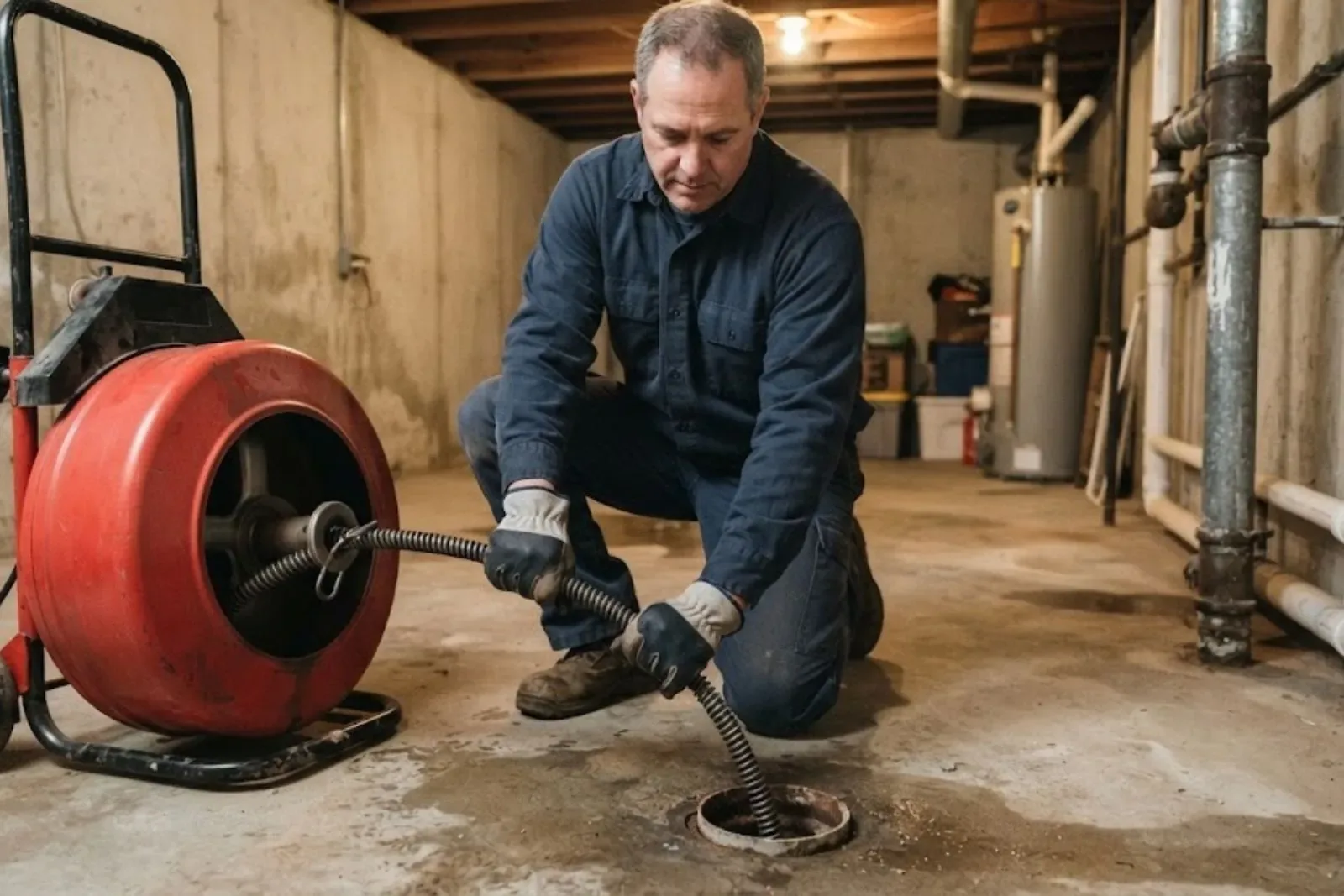
A sink that drains slowly without a real clog usually has trouble beyond the strainer. Common causes are a weak vent, a partial blockage in the branch or main line, buildup in the trap, poor drain slope, or a narrowed disposal or dishwasher connection. Quick test: if other fixtures gurgle or slow when the sink drains, the problem sits behind the sink. Talk to dispatch if the problem is happening now.
A one-minute test to run before you take anything apart
Fill the kitchen sink halfway, then pull the stopper and watch the other fixtures. Listen at the nearest bathroom sink and look at the toilet bowl and shower drain. Gurgling, bubbling, or a small drop in the toilet water means air is fighting to get into the line.
If other fixtures stay quiet, the slowdown is likely local: the trap, the tailpiece, the disposal, or the dishwasher hose. If several fixtures react, think vent or branch line, and stop treating the sink itself.
What you notice, what it likely means, what to try
Match the pattern, then start with the cheapest check.
| What you notice | Likely cause | What to try |
|---|---|---|
| Slow drain plus gurgling from the sink or nearby fixtures. | Partly blocked vent or partial branch clog. | Stop using the plunger. Check roof vent for debris. Call a plumber if gurgling continues. |
| Slow drain only with the dishwasher running. | Dishwasher hose or air gap restricted. | Clean the air gap, check the hose, and run the dishwasher separately from the sink. |
| Slow drain that clears for a day, then returns. | Grease or soap film narrowing the trap or pipe. | Remove and clean the trap, then flush with hot water. |
| Slow drain plus odor from the disposal side. | Food residue in the disposal or tailpiece. | Clean the disposal with the power off, then check the tailpiece connection. |
| Slow drain with water standing in a long, flat run. | Poor slope or a sag in the horizontal pipe. | Camera check. Slope fixes need a plumber to adjust the pipe. |
| Slow drain with other fixtures draining slowly too. | Partial blockage in the branch or main line. | Stop adding water and call for line cleaning and a camera pass. |
The disposal and dishwasher rows apply only if your sink has them.
When the vent is the quiet culprit
Every drain needs air behind the water. A vent pipe, usually running up through the roof, lets air in so water flows instead of sucking against the pipe. When a vent clogs with leaves, a bird nest, or frost, the drain slows and gurgles.
A vent problem rarely clears with a plunger because the water is not blocked, it is starved of air. A plumber can check the vent by camera or by testing air movement. If you see gurgling in more than one fixture, mention it on the call.
Traps, slopes and undersized drains
The trap under the sink holds a small water seal against sewer gas. It also catches grease and food scraps, which harden into a lining over months. A trap that looks open can still be narrowed by a thick coat of buildup.
Slope matters too. A horizontal drain must fall gently toward the stack, usually about a quarter inch per foot. A pipe that is too flat holds water and solids, and one that is too steep can leave solids behind as the water runs ahead of them.
Older remodels sometimes combine a sink with a larger fixture on a drain sized for less. If the slow drain began after a kitchen upgrade, the new fixture may be loading an old pipe.
Kitchen habits that narrow a drain over time
None of these clog a sink overnight, which is why the slowdown feels mysterious.
- Pouring cooking grease or oil down the drain, where it cools and coats the pipe.
- Rinsing coffee grounds, rice, or pasta water with starch into the sink.
- Running the disposal with only a trickle of cold water.
- Letting soap residue from dishwashing build into a film in the trap.
- Pushing fibrous scraps such as celery or onion skins into the disposal.
- Skipping the occasional hot-water flush after a greasy meal.
Disposal and dishwasher connections
The disposal tailpiece and the dishwasher drain hose join near the trap. If the dishwasher hose is kinked or its high loop is flat, wastewater from the dishwasher can back toward the sink. A new disposal installed with a poorly cut tailpiece can also leave a lip that catches food.
Before blaming the main line, look at these joints. If you are unsure, garbage disposal repair and a trap check can be done in one visit.
Housing eras and shared drains in Plainsboro, NJ
Plainsboro's township Land Use Plan says the 1970s and early 1980s were dominated by multifamily construction, and after the mid-1980s the mix shifted toward single-family detached homes. That mix matters for a slow drain.
In a townhouse, condo, or apartment, your kitchen drain may join a stack or branch that other units also use. A slow drain in your unit can come from a shared line you cannot reach. Tell your property manager or association first, because a repair there is not yours to open.
In a single-family house, the branch and main line belong to you, and a camera pass shows whether the slowdown starts at your fixtures or beyond.
Where this comes from: township Land Use Plan (master plan chapter).
What to try yourself, and where to stop
Safe checks: clean the strainer, clear the trap with a bucket underneath, and flush the line with hot tap water. Do not use chemical drain cleaner in a slow drain that has gurgling, because the product can sit in a partial blockage and weaken pipes.
Stop when you see gurgling in other fixtures, water backing out of a floor drain, or the slowdown returns right after a cleaning. Those call for drain cleaning with a proper machine, and a sewer camera inspection if it keeps happening.
Neighbors in East Windsor and Cranbury see the same pattern, but their sewer and water arrangements differ, so check with your own utility. Venting is part of the plumbing subcode too. The National Standard Plumbing Code, which New Jersey uses, expects fixtures to be vented so drains can empty smoothly, and a blocked vent can mimic a clog.
Questions readers ask
A vent problem, a coated trap, a flat drain slope, or a partial branch blockage can slow a sink without a visible clog. The gurgle test with nearby fixtures helps tell them apart.
Yes. A blocked vent keeps air from entering the pipe, so water drains slowly and often gurgles. It usually shows up in several fixtures.
Not if you suspect a vent or main line issue. The chemicals do not fix air problems and can sit in a partial blockage, damaging pipe and creating a hazard for the plumber.
Only if it is cracked, corroded, or leaking. A dirty trap should be cleaned first, then checked for the narrowing you could not see before.
It can, if several drains react together. The sewer main on your street belongs to the provider serving your side of the railroad, so a plumber can tell you whether the fault is in your pipe or beyond your property line.
Tell the landlord or property manager in writing. If the slowdown affects several units on one stack, the repair is theirs to arrange.
If a plunger found nothing, the slow drain is probably telling you something about the vent, the slope, or the line behind it.
Call (609) 547-1417Where we dispatch from
Our plumbers work across Plainsboro and the neighboring towns on the map. Our base is 777 Scudders Mill Rd, Plainsboro, NJ 08536, and the map shows the surrounding towns we serve.