
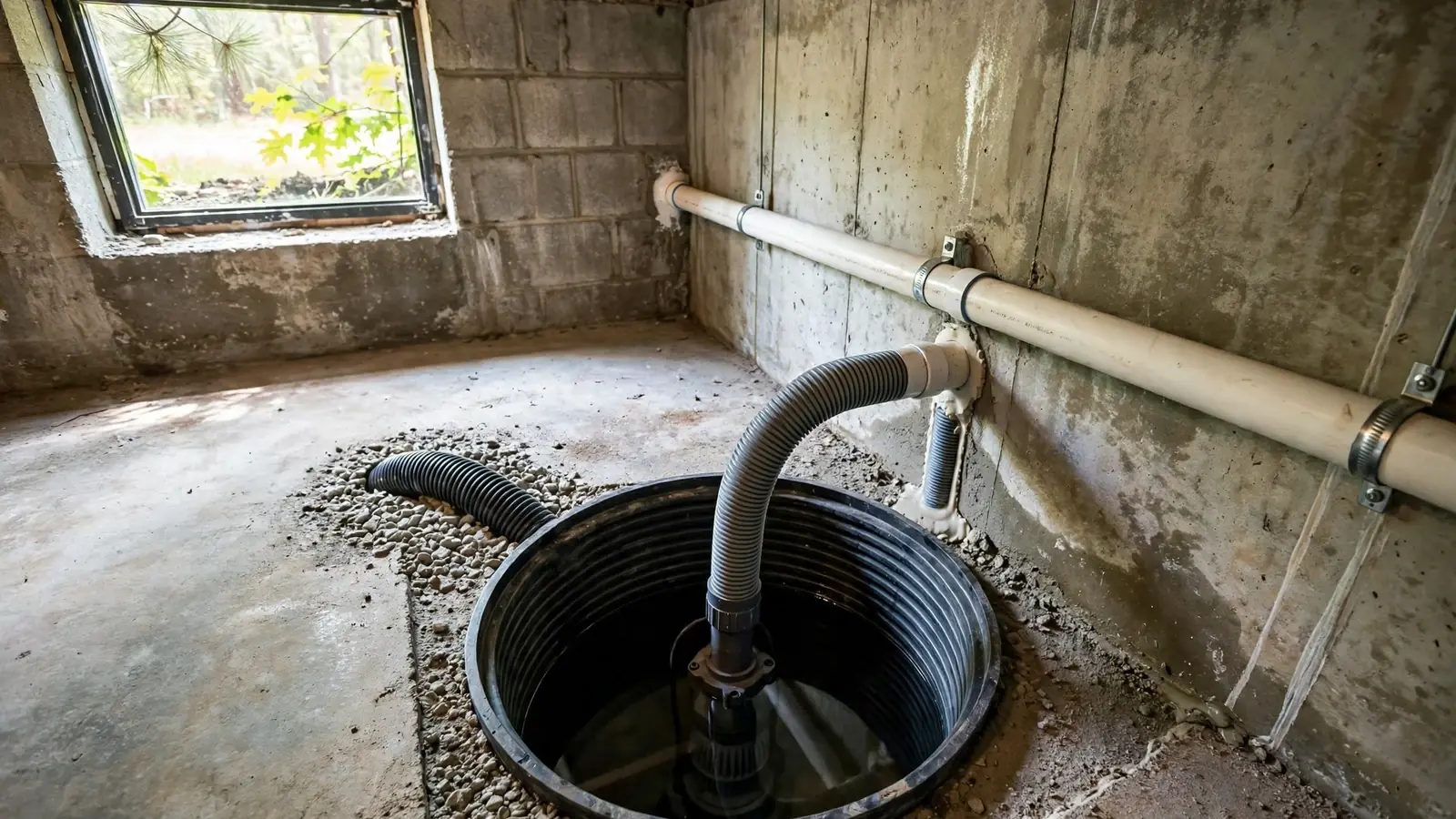
A sump pump sits in a pit in the lowest part of a home and pushes groundwater out before it reaches the floor. If yours has stopped during a storm, water is rising in the pit, or the basement is wet while you read this, our 24/7 line takes calls for sump pump repair in Plainsboro. Move valuables off the floor and stay out of standing water near outlets.
Most failures follow a few patterns. The pump runs constantly, or it never starts, or it runs and moves no water. This page explains what each pattern usually means, how backup power and check valves fit in, and why Plainsboro's own flood record is a good reason to test the pump before the next storm.
What homeowners notice before the pump fails
The words callers use for a failing sump pump are consistent. Any of these is worth a visit.
- Water in the basement when it rains, even though the pump seems to be on.
- The pump runs constantly, even in dry weather.
- The pump never runs, and the pit is full or nearly full.
- A loud grinding, rattling or humming noise with little water moving.
- The pump cycles on and off every few seconds.
- A float switch that sticks against the wall of the pit.
- Discharge water that returns to the pit after it leaves the house.
Symptom, likely cause and next step
A plumber tests the pump, the float, the check valve and the discharge line in that order.
| Symptom | Likely cause | Next step |
|---|---|---|
| Never starts. | Dead pump, tripped breaker or float stuck down. | Check the outlet and breaker, lift the float by hand, then test the pump. |
| Runs nonstop. | Stuck float, failed check valve or a high water table. | Free the float, inspect the check valve, and watch how fast the pit refills. |
| Runs but moves little water. | Clogged intake, failed impeller or frozen or blocked discharge. | Clear the intake and pipe, replace worn parts or the pump. |
| Cycles every few seconds. | Check valve missing or failed, so water drains back into the pit. | Install or replace the check valve. |
| Fails in storms only. | Power outage or pump too small for the inflow. | Add battery backup and review pump capacity. |
| Pit overflows. | Pump overwhelmed, discharge blocked or no backup. | Emergency pumping, then fix the cause. |
Sump pumps, ejector pumps and backup power
A sump pump removes groundwater from a pit near the foundation. A sewage ejector pump is a different machine that lifts waste from a below-grade bathroom up to the sewer line. Ejector pits are sealed and vented, and an ejector failure sends sewage, not clear water, into the basement. Tell the dispatcher which pump you have. If the water has no obvious source, a supply-side leak may be the cause, and leak detection can sort that out.
Storms often take out power, and the pump goes off exactly when the water rises. A battery backup, or a water-powered backup where pressure allows, keeps the pit from overflowing. A battery unit needs a test every few months, because a dead battery looks like a working system until it is needed.
Check valves, float switches and discharge lines
A check valve on the discharge pipe lets water leave but stops it from draining back into the pit. Without one, the pump re-pumps the same water over and over. A float switch tells the pump when to start and stop. Debris, a bent arm or a pit too narrow for the float can jam it.
The discharge line should end where water can spread across the yard and move away from the foundation. A line that empties against the house, into a neighbour's property or into a frozen outlet will fail the pump even when the pump is fine. Where the water goes is a legal question as well as a mechanical one.
Never tie a sump into a sanitary sewer
Plainsboro's own sump discharge rules were not found in township sources, so ask the township before choosing where the line ends. Neighbouring towns are clear. West Windsor's code bars sump pump discharge into the public sewer, and East Windsor's sewer authority prohibits sump pumps that send groundwater into sanitary connections. Clean water in a sanitary line overloads the sewer and can back it up for everyone. Keep sump and sanitary lines separate.
What to do when the basement is taking on water right now
A pit at the brim and water on the floor is an emergency. These steps buy time until a plumber arrives.
Protect yourself
Stay out of standing water if the pump, a power strip or outlets are in it. Turn off power at the breaker from a dry spot.
Lift what you can
Move boxes, files and electronics onto shelves or tables. Water damage grows by the hour.
Check the simple things
A tripped GFCI outlet or breaker is the most common reason a pump stops. Reset it from a dry spot.
Clear the discharge outlet
Check outside that the pipe is not blocked, frozen or buried in leaves. Never tie it to a sanitary drain.
Call the 24/7 line
Describe the pump, the water level and whether you have backup power. Dispatch will decide whether pumping out the pit comes first.
Plainsboro's flood record and why it matters to the pit
After Hurricane Floyd in September 1999, local papers called the flooding in the West Windsor and Plainsboro area the most extensive in recent times, with roads closed at seven locations. On August 22, 2021, flooding closed Petty, Nostrand, Mapleton, John White, Schalks Crossing and George Davidson roads. The pattern says heavy rain hits this area quickly, so test a pump before storm season rather than after.
The township's 2025 stormwater plan says flooding still occurs along Mapleton Road, and it also lists Schalks Crossing, Dey, Maple Avenue and George Davison roads. The Land Use Plan notes seasonal high water tables and flood hazard areas in parts of the township. A high seasonal water table raises how often a pump runs, so a pump in such a spot should be sized, backed up and tested accordingly.
Nothing in these sources says which Plainsboro houses have basements, so check your own. Dispatch also covers nearby Cranbury if you work or own property there.
What affects the price of sump pump repair
A float fix and a new pump with battery backup are very different jobs, so the price follows the findings.
Repair or replace
A stuck float or loose fitting is quick work. A burned-out motor usually means a new pump.
Pump type
A pedestal pump costs less than a submersible, and a sewage ejector costs more than either.
Backup system
A battery or water-powered backup adds parts and installation time but protects against outages.
Discharge work
Rerouting or extending the discharge pipe adds material and labour.
Storm timing
Calls during a major storm, at night or on a holiday usually cost more than a scheduled visit.
Standard homeowners policies often exclude groundwater seepage and sump failure unless a water-backup endorsement is attached. Ask your insurer before a storm so you know what is covered, and photograph the pit and any damage.
Call the 24/7 line to describe what the pump is doing and get a clear price before work starts.
Call (609) 547-1417Sump Pump Repair questions from Plainsboro homeowners
Yes. The 24/7 line takes sump pump calls at any hour, including during storms. Expect dispatch to ask about the water level, the pump type and whether backup power is installed.
A stuck float, a failed check valve or a very high water table is the usual cause. Free the float if it is jammed, and if the pit refills within seconds of shutting off, ask a plumber to inspect the check valve.
Plainsboro's rules were not found, so ask the township. Never connect a sump to a sanitary sewer, because neighbouring West Windsor and East Windsor both prohibit it.
If your area floods during storms that also cause power outages, yes. A backup keeps the pit from overflowing during the exact moments the main pump cannot run.
No. A sump pump moves clear groundwater out of the house. An ejector lifts waste from a below-grade bathroom to the sewer. They have different pits and different failure risks.
The water may be coming from a plumbing leak or from surface grading. See basement waterproofing for how to tell seepage from a leak.
Pour a bucket of water into the pit every few months and watch it start, empty and shut off. Test again before spring and storm season, and after any power outage.
Water in the basement when it rains?
The 24/7 line handles pump failures during the storms that cause them, and the first call is about the water level.
Where we dispatch from
We send sump pump crews across Plainsboro and the neighboring towns. Our base is 777 Scudders Mill Rd, Plainsboro, NJ 08536, and the map shows the surrounding towns we serve.