
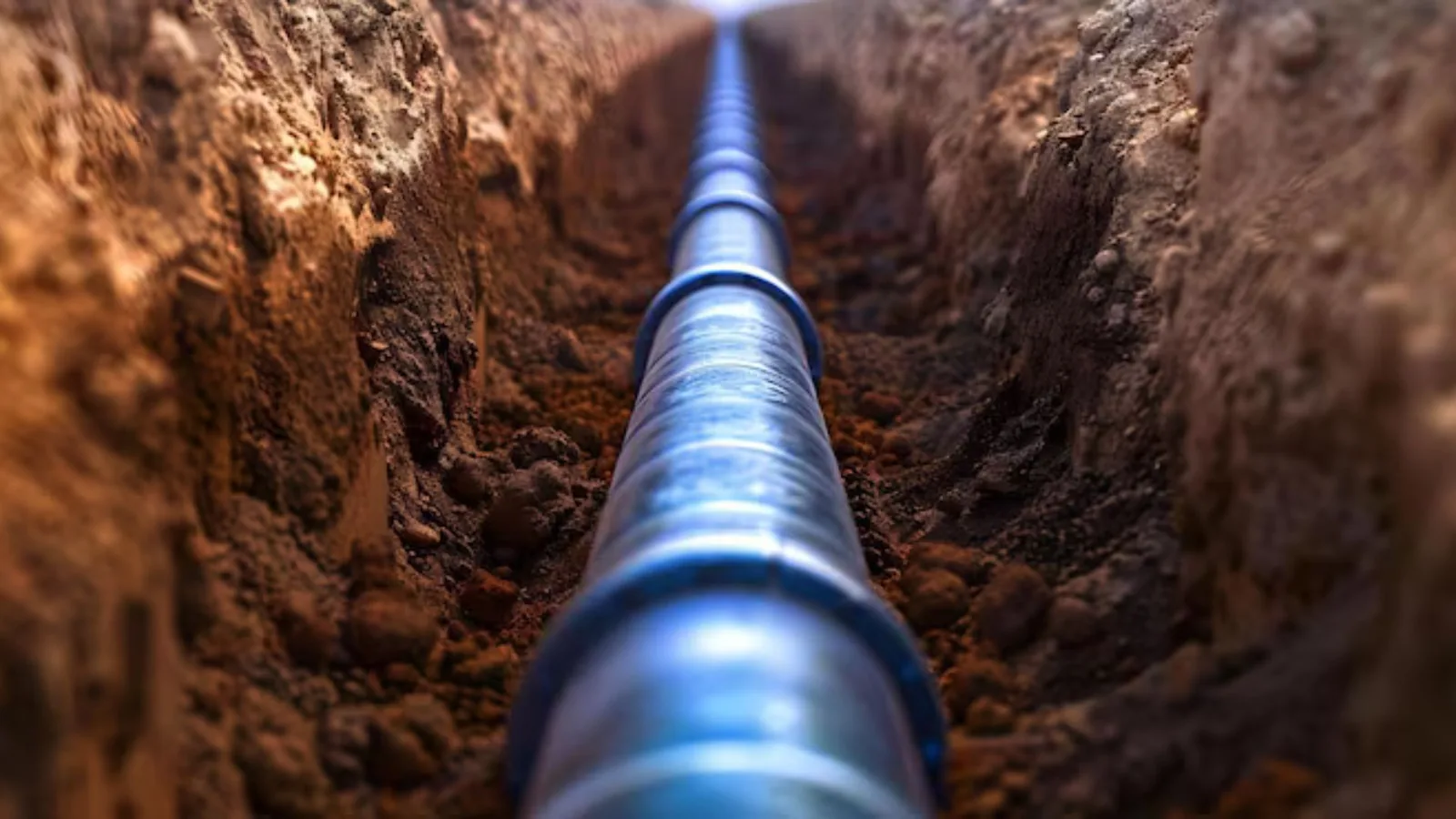
Callers rarely say service line. They say the pressure dropped, there is a wet patch in the yard, the meter spins with everything off, or there is no water at all. Each of those can point to the buried pipe between the street main and your house. Water service line repair in Plainsboro, NJ is handled on the 24/7 line, and if water is surfacing, close your main shutoff while you wait.
The hard part is deciding who owns the problem. The main belongs to the utility, the house plumbing belongs to you, and the pipe between them is split by a shutoff valve and, often, by a property line. Finding which side is leaking comes before any digging.
Symptom, likely location and who to call
This table narrows where the problem is before anyone picks up a shovel.
| What you notice | Likely location | Who to call |
|---|---|---|
| Pressure low on every fixture, neighbors also affected. | Utility main or booster area. | New Jersey American Water. |
| Water wells up at the curb or around the meter box. | Curb stop, meter or utility service connection. | New Jersey American Water first. |
| Wet or sunken strip of lawn between meter and house. | Private side of the service line. | A licensed plumber, after asking the utility about the boundary. |
| Meter spins with every fixture off. | Service line or a leak inside the house. | A plumber to isolate it, with a utility call if the meter looks wrong. |
| No water at one fixture only. | Inside plumbing, valve or supply line. | A plumber. |
| No water anywhere, main shutoff open. | Frozen or collapsed service line, or a utility outage. | Utility first, then a plumber. |
The utility's customer line appears on the township Contact Us page and covers emergencies and general questions.
When a service line leak is an emergency
It is urgent when water is rising to the surface, when the yard is washing out, or when the house has lost water completely. Close the main shutoff inside the house, then check the meter. If the meter keeps moving with the main closed, the leak is on the utility side of that valve, and the utility needs to hear about it.
A slow loss shows up as a slowly rising bill and a lawn that stays green and soft in dry weather. That can usually wait for a same-day appointment when available. A major break or a flooded basement or crawlspace cannot, so call at any hour.
Low pressure: where to look first
Low pressure at every fixture usually means the supply, not the pipes in one wall. Start with the main shutoff, which can be partly closed or have a worn gate valve. Then check the pressure regulator, if the house has one, and the filters or screens that clog with grit after utility work.
If neither is the cause, the service line itself may be narrowing from corrosion or leaking before it reaches the house. Township planning documents describe the local pressure zone as fed by booster stations and well fields, so a drop that hits the whole street at once is a utility matter. A drop at your house only is yours to investigate.
Curb stop and meter
The curb stop is a valve in a small pit near the street or sidewalk that the utility uses to shut off a single property. Your own main shutoff is inside. The meter sits between them, in a pit outdoors or inside the house, depending on how the line was built.
Do not operate a curb stop yourself. It usually takes a special key, and turning it can damage the valve. If your inside main will not close, tell the dispatcher so the plumber brings the right tools, and the utility can be asked to shut off at the curb.
Lead and galvanized service lines
New Jersey law (P.L. 2021, c.183) requires water systems to replace lead service lines within ten years of mid-2021, which means by July 2031. New Jersey American Water has also committed to replace lead and galvanized service lines by 2031.
Who pays for the private side is a question for your water provider, so ask New Jersey American Water before you hire anyone to replace a line on your own. If a plumber digs up the line and finds lead or galvanized pipe, stop and ask the utility about its schedule and cost rules. A burst inside the house is a separate job, covered under burst pipe repair.
Open trench, trenchless and pipe bursting
Open trench repair means digging along the line, replacing the damaged section and refilling. It is straightforward and lets the plumber see the whole pipe, but it tears up lawn, driveways and walks. Trenchless methods use small pits at each end and pull a new pipe through the old path.
Pipe bursting pulls a new line through while breaking the old one outward. It spares landscaping but needs access pits and a path free of other utilities, and it cannot always handle a bent or collapsed line. Wooded lots with large roots or trees close to the line may favor trenchless work, but the plumber decides after locating the pipe.
Before anyone digs
Digging near buried lines needs a utility markout, and that has a legal clock.
Locate the problem
The plumber confirms which side of the shutoff is leaking, using a meter check and a listening microphone.
Ask the utility
Call New Jersey American Water to confirm the boundary and whether it plans line work on your street.
Call 811
NJ One Call requires at least three business days notice before excavation, and the markout covers public utilities.
Hand-dig near marks
Within two feet of a marked line, digging is done by hand to avoid striking it.
Repair, test and restore
The new pipe is pressure-tested before backfill, and the surface is restored.
What to gather for the plumber
These details help the first visit solve more.
- Whether the main shutoff turns, and the meter indicator with every fixture off.
- The location of the meter and curb box, and whether either looks wet or flooded.
- Pressure at an outdoor spigot versus an indoor tap.
- What material the pipe is where it enters the house, copper, plastic or gray metal.
- Anything the utility told you about work on your street.
- Photos of any wet ground, with a date.
Plainsboro specifics: utility, lots and records
Plainsboro is in the New Jersey American Water franchise area, and the Raritan system serves the township. Because the same company owns the main and the lead replacement program, your best first call on a pressure drop is the utility's emergency and general line listed on the township Contact Us page.
On a wooded lot, or one near the Plainsboro Preserve, access for a trench or a pit can matter as much as the repair. Trees, fences, paved parking and shared driveways all affect the choice between trench and trenchless. Ask the plumber to show the planned path before work starts.
If the repair changes the size or route of the line, ask the township Building Division on Plainsboro Road whether a permit is needed. The markout rules are the same statewide, including in East Windsor.
What drives the price of a service line repair
Cost depends on length, depth, method and what sits on top of the pipe.
Length and depth
A short spot repair near the meter costs less than replacing the whole run from the street.
Method
Trench is often simpler to price, trenchless can cost more up front but save restoration.
Surface restoration
Lawn is cheaper than concrete, pavers or asphalt to restore.
Pipe material
Copper and modern plastic differ in material and fitting cost. Old galvanized inside the house may call for repiping at the same time.
Utility coordination
Waiting on markouts, curb shutoffs or the utility's own crew can extend the job.
Standard homeowners policies often exclude the cost of repairing an underground line, though some offer an add-on for service lines. Ask your insurer what is covered, and ask the water utility whether any program applies.
Call the 24/7 line to talk through the symptoms and get a clear price before work starts.
Call (609) 547-1417Water Service Line Repair questions from Plainsboro homeowners
Yes. The 24/7 line is open at any hour for active leaks, flooding or no water. Plan on a utility call too, since the curb stop and main are the utility's.
Close the main shutoff and watch the meter. If it keeps moving, water is leaving the pipe before the valve. Wet or sunken ground between meter and house is another sign.
Ask New Jersey American Water. State law requires water systems to replace lead service lines by July 2031, and the utility can explain what that means for the private side.
Yes, any excavation needs a NJ One Call request with at least three business days notice, and hand-digging within two feet of marked lines.
Often, yes, with trenchless methods or pipe bursting, but the plumber must first locate the pipe and rule out bends or other utilities in the way.
Sometimes. If every fixture is low, check the main shutoff and regulator, and ask whether neighbors are affected. See leak detection if the meter also spins.
A new line enters through the foundation or slab and connects at the main shutoff. Any change in pipe size or location may need a call to the local construction office.
Find out whose pipe is leaking
Call the 24/7 line and a plumber will work out which side of the shutoff the water is on.
Where we dispatch from
We send water service line repair crews across Plainsboro and the neighboring towns. Our base is 777 Scudders Mill Rd, Plainsboro, NJ 08536, and the map shows the surrounding towns we serve.