
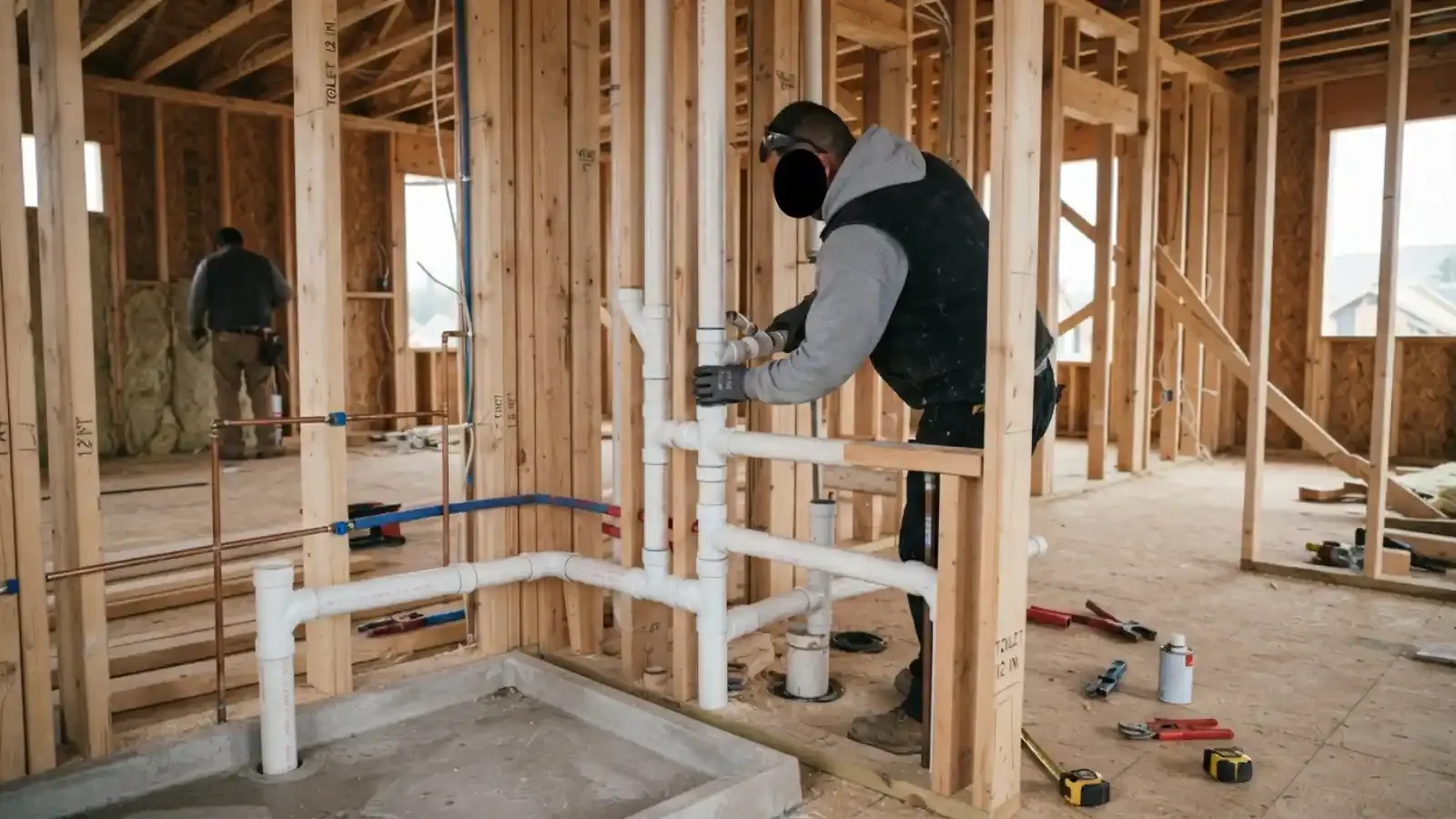
Plumbing installation in Plainsboro covers anything that adds, moves or replaces fixtures and the pipes behind them: a new vanity, a bathroom in a finished basement, a laundry hookup, an outdoor spigot or a full rough-in for an addition. The work is mostly done inside walls and floors, so it has to be right before it is covered.
This page explains what goes into a new installation, which materials are used, how New Jersey treats the paperwork, and how to line up the trades. It is for planned projects. If water is already coming through a ceiling, the page you want is burst pipe repair.
Project, permit path, and the usual sequence
Always confirm with the local construction office, because small changes can move a project from one path to the other.
| Project | Notice or permit path | Typical sequence |
|---|---|---|
| Swap a sink, toilet or faucet in the same spot. | Minor work or no change in system size. Ask the local office. | Shut off, replace, test, inspect where required. |
| Add a new fixture in an existing dwelling space. | Minor work if no increase in water distribution, service or house drain. Notice and application still apply. | Notice, plan the run, rough-in, set fixture, inspect. |
| Bathroom remodel with moved drains. | Usually a permit, because drains and vents change. | Permit, demolition, rough-in, inspection, close walls, set fixtures. |
| Addition or new construction. | Permit for the whole plumbing system. | Underground first, rough-in, inspection, top-out, final. |
| Basement bathroom. | Permit, plus a plan for drainage below the sewer line. | Permit, cut the slab, rough-in, inspection, pour, finish. |
| Outdoor hose bib. | Ask the local office. Frost-free types are standard. | Wall penetration, supply tie-in, shutoff inside, test. |
How New Jersey sorts small jobs from big ones
N.J.A.C. 5:23-2.17A defines minor work. It includes replacing piping with approved material of like capacity, replacing water heaters with new ones of like capacity, and installing new fixtures in existing dwelling space with no increase in the size of the water distribution system, water service or house drain.
Minor work is not permit-free. The owner or contractor gives notice to the enforcing agency before starting and files a permit application within five business days. Work that enlarges the system or adds new drains or vents falls outside minor work and needs a full permit.
New Jersey's plumbing subcode is the National Standard Plumbing Code. Only a master plumber, an authorized plumbing contractor or their W-2 employees may do plumbing work. Check any plumber through the NJ Division of Consumer Affairs License Verification System.
Supply pipe in plain terms: PEX, copper and press fittings
PEX is flexible plastic tubing. It bends around corners, resists freezing splits better than rigid pipe and is quick to run in remodels. Copper is rigid metal with a long track record, soldered or joined with press fittings. Press fittings use a tool to crimp a sealed ring around the joint, avoiding a torch in finished spaces.
Which one fits depends on the house. A short extension of existing copper is often done in copper. A longer run through finished walls often favors PEX. Ask the plumber why a material is chosen and what the code and the manufacturer say about its use.
Drains and vents: the part nobody sees
Every fixture needs a drain that slopes toward the sewer and a vent that lets air in behind the water. Without the vent, a drain gurgles, traps lose their water seal and sewer gas can enter the room. A new bathroom group needs a drain size and a vent path that the code approves.
A toilet or shower move is often more expensive than adding a sink, because the drain has to slope and the vent has to connect. A drain notched through a floor joist also needs a structural check. Share your layout early so the plumber can tell you what is easy and what is hard.
What to do before the plumber starts
A little prep avoids stalled work and change orders.
- Decide fixture locations and models before rough-in, since rough-in dimensions depend on them.
- Have the fixture spec sheets, or know the brands, because rough-in heights vary.
- Check the main shutoff and any older isolation valves work.
- Confirm who is pulling the permit and who schedules inspections.
- Get written approval from your HOA or condo association where required.
- Plan access: a clear route, a spot to work and a place for tools and debris.
- Verify the contractor's license and, for home improvement work, registration.
From first walk-through to final inspection
The sequence is similar for most installs.
Walk-through and plan
A plumber measures the space, checks the existing supply and drain, and sketches the new runs.
Notice or permit
The plumber contacts the Building Division and files the notice or application the scope calls for.
Rough-in
Supply lines, drains and vents are installed in the open walls or floor, and pressure tested.
Rough inspection
The township plumbing inspector checks the work before walls are closed.
Fixtures and final
Fixtures are set, connections tested, and a final inspection closes the permit.
Plainsboro paperwork, approvals and who owns the house
The Building Division is on Plainsboro Road and handles plumbing permits for the township. Its permit page lists Building, Fire, Plumbing and Electrical subcodes, so a project that adds a bathroom may also involve an electrical inspection for a GFCI outlet or a fan. Ask for the list of inspections at the start.
Census data puts owner occupancy in Plainsboro at 47.7 percent, so a large share of homes are rented. If you are a tenant, the owner must approve and authorize alterations, and the permit is the owner's responsibility. In condos and townhomes, check your association rules for plumbing alterations, noise windows and shut-off notices to neighbors.
Before hiring, verify the plumber's license in the NJ Division of Consumer Affairs License Verification System. For home improvement contracts, New Jersey also requires registration for most home improvement businesses and written contracts for jobs over five hundred dollars. Your project may touch water heater installation or repiping too, so plan those together.
Laundry, outdoor spigots and fixtures people forget
A washing machine needs a hot and cold supply, a standpipe drain with a trap, and a vent. A new laundry closet on an upper floor also needs a drain pan, since an overflow can run to the ceiling below.
Outdoor hose bibs should be frost-free types with an indoor shutoff, and the hose should come off in winter. Trenton area normals put January lows at 24.3 F, which is cold enough to split an exposed spigot. Neighbors in Cranbury and Princeton face the same winter.
What goes into a plumbing installation quote
Ask for the quote in line items so you can compare scope with scope.
Fixture count and type
A freestanding tub or a body-spray shower costs more to rough in than a standard vanity.
Distance from existing lines
A longer run of supply, drain and vent means more pipe and labor.
Floor and wall access
Open framing is cheaper to work in than a finished ceiling or a slab.
Permits and inspections
Fees and the number of inspections depend on the scope.
Materials
PEX, copper and press fittings differ in cost and labor.
Homeowners insurance does not pay for planned installations. It may cover sudden water damage caused by a failed new connection, but check the policy and keep contract and permit records.
Call to describe your project and get a clear price before work starts.
Call (609) 547-1417Plumbing Installation questions from Plainsboro homeowners
Adding a fixture in existing dwelling space with no increase in the water distribution system, service or house drain is minor work. Notice and an application are still required. Anything larger needs a permit.
It is New Jersey's plumbing subcode. It sets rules for pipe sizes, venting, traps and fixtures, and the township inspector applies it.
PEX is widely used, but approval depends on the code and the listing of the specific product. Ask the plumber to confirm it is approved for your use.
Plumbing work in New Jersey must be performed by a master plumber, an authorized plumbing contractor or their employees. Check with the Building Division on what applies to an owner on their own home.
Only with the owner's approval. Owners occupy under half of Plainsboro homes, so the owner usually pulls the permit and signs the contract.
Yes if digging is involved. NJ One Call asks for three business days of notice, and hand digging is required within two feet of marked lines.
Use the NJ Division of Consumer Affairs License Verification System. For leak or burst pipe problems rather than installs, see leak detection.
Plan the rough-in before demolition
Call and describe the layout, and a plumber will outline the materials, permits and inspection steps.
Where we dispatch from
We send plumbing installation crews across Plainsboro and the neighboring towns. Our base is 777 Scudders Mill Rd, Plainsboro, NJ 08536, and the map shows the surrounding towns we serve.