
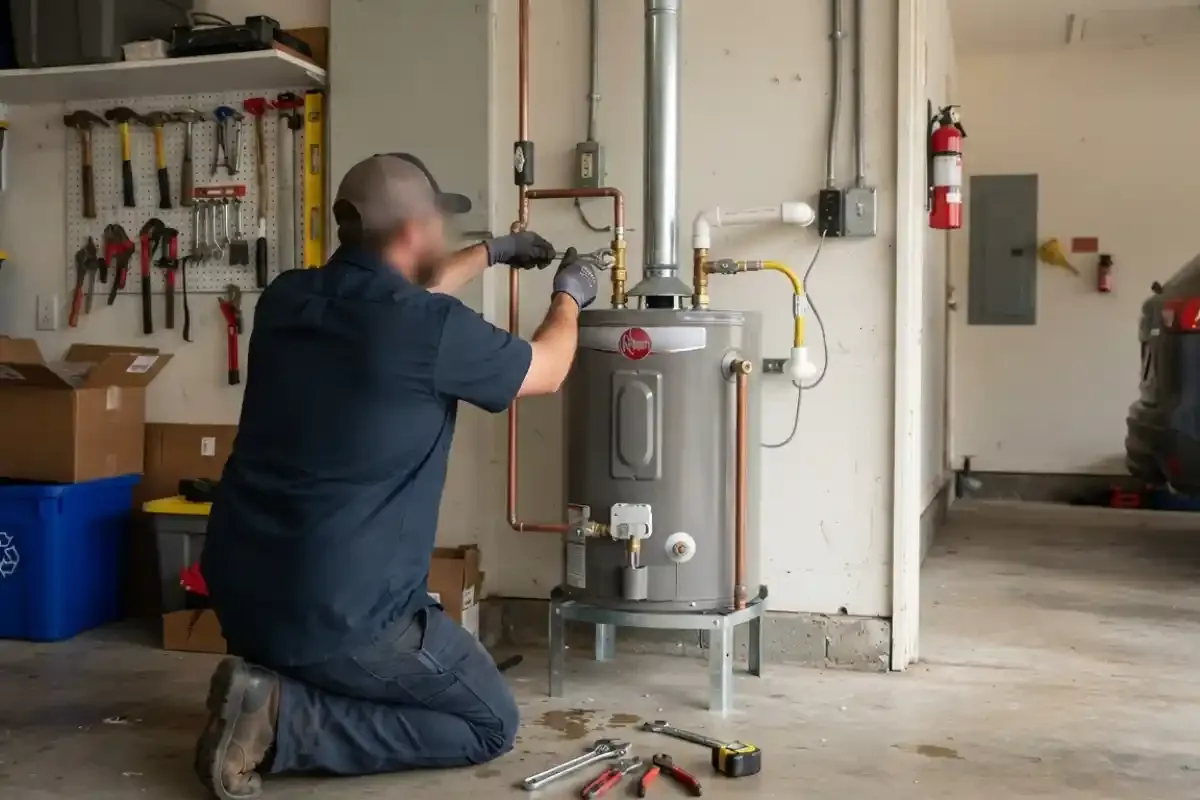
Most water heater installation in Plainsboro is not a swap. It is a project: the heater is moving to a new room, a gas unit is becoming electric, a basement is being finished around it, or a new house needs its first one. Those jobs are planned, so the questions are about layout, code and the sequence of trades instead of speed.
This page is about that planning. If the tank is leaking right now, the replacement page covers the same-day path. Here we cover what changes when the heater is not going back in the same spot with the same fuel, and what to settle before install day.
Project type, what changes, what to ask
The same heater model can need very different work depending on the project.
| Project | What changes | Ask your installer |
|---|---|---|
| Move the heater to a new room. | New supply and drain runs, vent or circuit path, sometimes a new wall penetration. | Where will the T&P discharge and condensate drain go? |
| Gas to electric. | Gas line capped, a new dedicated circuit and breaker, no vent. | Does the panel have room for a new double-pole breaker? |
| Electric to gas. | Gas line extension, vent, combustion air. | Is the existing gas meter and line large enough? |
| Tank to heat pump unit. | Space, airflow, condensate drain, a 240 volt circuit. | How much clearance does the model need? |
| New construction or addition. | Rough-in first, inspections before walls close. | When does the plumbing rough-in inspection happen? |
| Add a recirculation line. | Return piping, a pump or built-in loop, extra tank connections. | Does the heater have a recirculation port? |
The permit question for a planned install
A like-for-like replacement is minor work under N.J.A.C. 5:23-2.17A, with notice before work and an application within five business days. A planned install is often not like-for-like. A new location, a new fuel, a different capacity or new venting or gas work may fall outside minor work.
Do not guess. Ask the local construction office what permit and inspections your project needs, and ask before the heater is bought. Plainsboro's Building Division page says water heaters need a permit, and its Subcode listing includes plumbing, electrical and fire. A project that touches several subcodes may mean several inspections.
In New Jersey, only a master plumber, an authorized plumbing contractor or their employees may do plumbing work. You can verify a plumber through the NJ Division of Consumer Affairs License Verification System.
Venting and combustion air: where gas projects get tricky
A gas water heater burns air and sends exhaust outside. An atmospheric unit rises through a metal flue by natural draft. A power-vented or condensing unit uses a fan and can run through plastic pipe to a side wall. Each type has rules for length, slope and clearance from windows and meters.
Combustion air matters most in small closets. A tight closet in a modern, sealed home can starve a burner and cause backdrafting, which pulls exhaust into the room. If the heater is in a closet or small utility room, ask how combustion air will be provided.
The gas line must also carry enough volume for everything on it. A plumber adds up the rated input of each appliance and compares it with the pipe size and length. A bigger heater on an old half-inch line can starve the burner.
Electric and heat pump circuits
An electric tank or heat pump unit needs its own circuit, sized to the nameplate and wired by a licensed electrician. Check the panel for open breaker spaces before you choose a model.
A hybrid heat pump heater also removes heat from the room air and produces condensate. That water must drain by gravity or a small pump. A unit in a closet needs a clear path for both the air and the drain.
What to have ready for install day
Preparation shortens the visit and reduces surprises.
- Clear a three foot working area around the old and new locations.
- Know where the main water shutoff is and that it closes fully.
- Locate the gas shutoff and the electrical panel, and leave both unblocked.
- Confirm parking and any building loading rules if you live in a condo or townhouse.
- Get written association approval before the day if your community requires it.
- Have the model number and the permit or notice confirmation available.
- Plan for a few hours without hot water, and for pets and children to be elsewhere.
How a planned install runs from quote to inspection
The order matters because inspectors look at specific stages.
Site visit and scope
A plumber checks the space, vent route, gas line, panel and drain, then writes down every change from the old setup.
Permit and notice
The plumber contacts the township Building Division and files what the project requires.
Rough-in work
New supply, drain, gas or electrical runs are installed. In new construction, this is inspected before walls close.
Set the heater
The unit goes in with a drain pan, expansion tank, new relief valve piping and any vent or condensate line.
Start-up and inspection
The plumber tests combustion, venting, gas joints and relief valve, then the inspector signs off.
Plainsboro housing stock and the install it points to
Plainsboro grew fast in the 1970s and early 1980s, and that era was dominated by multifamily construction, according to the township Land Use Plan. In condos and apartments the heater often sits in a closet with a shared flue or a through-wall vent. Ask your management company whether a new vent can use the old path before you plan a fuel change.
Walker-Gordon was approved as an R-90 zone in 1988 and includes 234 patio homes on 4,500 square foot lots. Small lots leave little room for a larger mechanical room, so check the available space and the vent clearance to the next property before you pick a model.
If your project includes a new gas service, or any outdoor line or digging, call 811 before work starts. NJ One Call asks for three business days of notice, and hand digging is required within two feet of marked lines. Neighbors in Princeton and East Windsor face the same rule.
Other connections a code inspector will look for
The temperature and pressure relief valve needs a discharge pipe that ends where it is visible and safe, usually near the floor or at a drain. It is never capped or reduced in size.
A drain pan under a heater in a finished space catches slow leaks and routes them to a drain or the outdoors. An expansion tank on the cold line absorbs pressure when the water heats. Both matter more in a finished basement or upper floor.
A bigger family or a recirculation loop changes demand. See plumbing installation when the project also involves new fixtures or a bathroom.
What shapes the price of a planned installation
Two installs of the same model can have quite different totals.
Scope of the move
Relocating a heater costs more than a same-spot swap because supply, drain and vent runs change.
Fuel conversion
Adding or capping a gas line, running a new circuit or upgrading a panel adds separate trades.
Venting type
Plastic power vent or condensing venting costs differently from an existing metal flue.
Permits and inspections
More subcodes involved means more fees and visits.
Access and finish work
Opening and closing walls or ceilings, or working in a tight closet, adds labor.
Homeowners insurance generally does not pay for planned upgrades or fuel conversions. If a water leak from a new install damages the property, the coverage depends on the cause, so keep the contract and permit records.
Call us to walk through your project and get a clear written price before work starts.
Call (609) 547-1417Water Heater Installation questions from Plainsboro homeowners
Yes. A replacement puts a similar unit in the same spot. An installation covers new locations, fuel changes, new construction and added loops. The urgent version is described under water heater replacement.
Plainsboro's Building Division says water heaters need a permit. Moving a unit usually changes more than like capacity, so ask the local construction office before work starts and let your plumber file.
Often yes. It needs a dedicated circuit, panel capacity and the gas line to be capped safely. Ask about running costs too, because the fuel prices differ.
That depends on the appliance input, the pipe length and the number of appliances on the line. A plumber calculates it from the code tables and the meter capacity.
Only if the project involves digging outside, such as a new gas service or an outdoor line. NJ One Call needs three business days of notice and requires hand digging within two feet of marked lines.
Census data puts owner occupancy in Plainsboro at 47.7 percent, so many homes are rented and ownership matters. Tenants cannot approve work on the owner's equipment. Owners should check their association rules and get approval in writing.
Often. If the system is closed by a backflow preventer or pressure reducing valve, an expansion tank protects the tank and valves from pressure spikes. A plumber can test your pressure.
Plan the install before the walls close
Call and describe the project, and a plumber will outline the venting, utility and permit steps.
Where we dispatch from
We send water heater installation crews across Plainsboro and the neighboring towns. Our base is 777 Scudders Mill Rd, Plainsboro, NJ 08536, and the map shows the surrounding towns we serve.